Wednesday, 18 September 2013

Some Famous People

D.W. Griffith 

He was a premier pioneering American film director. He is best known as the director of the epic 1915 film The Birth Of The Nation and Intolerance

He was first who used advanced camera and narrative techniques. 


Here is an example of his filming.


Lev Kuleshov


He was a Soviet filmmaker and film theorist who taught at and helped establish the world's first film school, the Moscow Film School.

He did a lot of theoretical work. For example Kuleshov Effect.
This footage is the the first demonstration of montage. It changed the meaning of cinema and established editing as an art form and a key tool in the creation of the film.
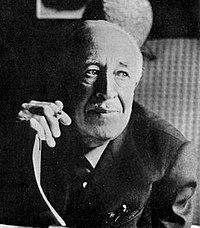

Sergei Eisenstein


He was a pioneering Soviet Russian film director and film theorist, often considered to be the "Father of Montage". He is noted in particular for his silent films Strike (1924), Battleship Potemkin (1925) and October (1927), as well as the historical epics Alexander Nevsky (1938) and Ivan the Terrible (1944, 1958).

Continuity Editing Example

Tuesday, 17 September 2013

Prep

Editing is the process of selecting and preparing writtenvisualaudible and film media used to convey information. The editing process can involve correction, condensation, organisation, and other modifications performed with an intention of producing a correct, consistent, accurate and complete work.
Cutting is when one image suddenly replaced by another, without a visible transition.

  • Overlapping Edit is used to show one scene from different angles. Usually 4-5 cameras are used.
  • Crosscutting is used to quickly switch between two places to show one continuing action from different locations. 
  • Montage is style of editing when through a lot of scenes long period of time is shown. Usually used to speed-up the time in a film.

Tuesday, 10 September 2013


Continuity editing is the predominant style of film editing and video editing in the post-production process of filmmaking of narrative films and television programs
Here is an example of it.

Shot reverse shot (or shot/countershot) is a film technique where one character is shown looking at another character (often off-screen), and then the other character is shown looking back at the first character. Since the characters are shown facing in opposite directions, the viewer assumes that they are looking at each other.[

match cut, also called a graphic match (or, in the French term, raccord), is a cut in film editing between either two different objects, two different spaces, or two different compositions in which an object in the two shots graphically match, often helping to establish a strong continuity of action and linking the two shots metaphorically.


That's my photo.

Classical Hollywood cinema/editing

HELLO MRS. JOY, That is my new blog.